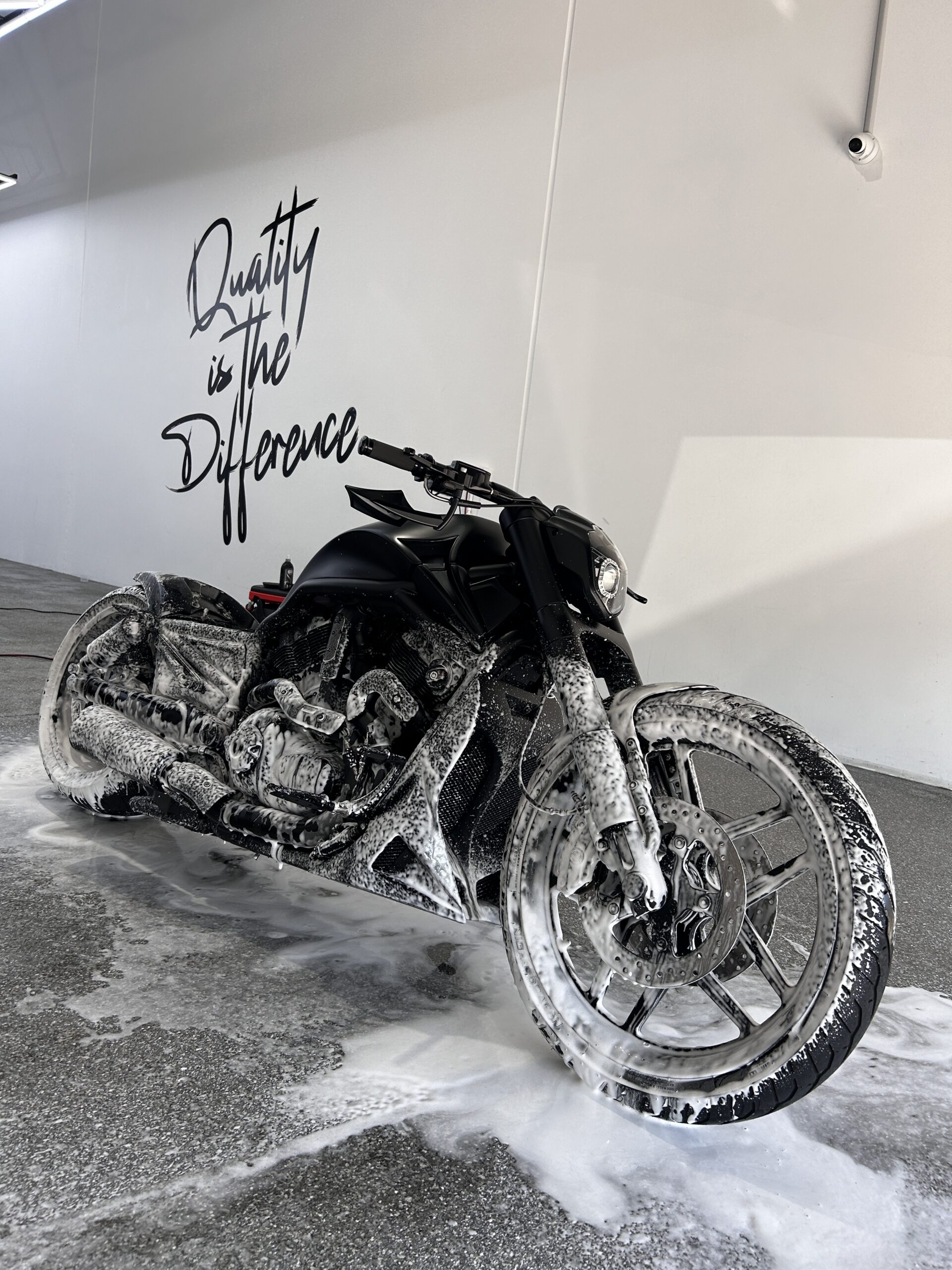

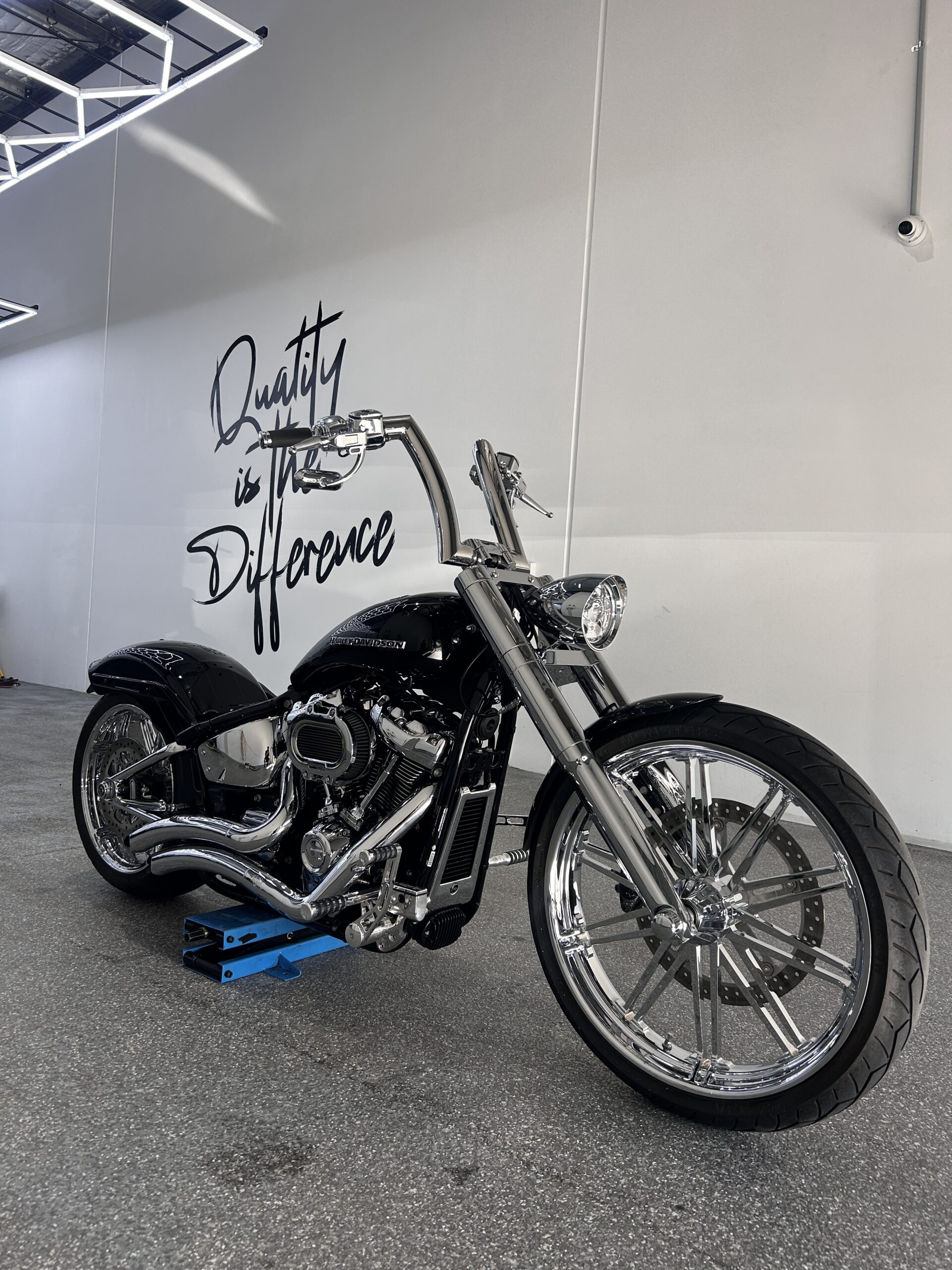
A bike is not one surface, it is five or six, and that is what makes coating a motorcycle different from coating a car. On a Harley or an Indian you are typically looking at painted tank and guards, chrome, powder coated frame and engine cases, polished or raw alloy, plus leather and vinyl. Each of those wants something different, and a product that is perfect on the tank can be the wrong answer on chrome.
Done properly, a coating gives you the thing bike owners actually want: the finish stays deep, the chrome stops spotting after every ride, and the wash afterwards takes a fraction of the time. On a bike that is largely exposed while it is ridden and while it is parked, that adds up quickly.
The tank, guards and any painted covers are the closest thing to automotive paint, and they respond the same way. Swirl marks, UV fade and etching from bugs and bird droppings all happen exactly as they do on a car, and correction before coating follows the same rule: a coating is clear and fills nothing, so anything on the paint when it cures is locked under it.
The difference is that a bike tank is small, curved and often has candy, metallic or pinstriped finishes that are less forgiving to correct than flat panels. There is less room for error and, on older or custom paint, sometimes less clear coat to work with, which is the same limit we set out in why paint correction comes before coating.
Chrome is the surface bike owners spend the most time on and the one coating helps most. Bare chrome is a magnet for water spotting, and every ride in the wet or wash left to dry in the sun leaves mineral marks that need polishing off. Worse, chrome pits over time once corrosion starts at any tiny break in the plating, and coastal air accelerates that considerably.
A coating over clean chrome gives water somewhere to run off rather than sit, and stops road grime keying into the surface. It will not repair pitting that has already started and it is not a substitute for keeping salt off, but it removes most of the reason chrome deteriorates between rides.
| Surface | What goes wrong | What a coating changes |
|---|---|---|
| Painted tank and guards | Swirls, UV fade, bug and dropping etching | Same benefits as on a car, once corrected first |
| Chrome | Water spotting, road grime, pitting over time | Large improvement in spotting and cleaning, does not reverse pitting |
| Powder coated frame and cases | Fading and chalking on darker coatings, grime in tight areas | Slows fade and makes the awkward areas rinse cleaner |
| Polished or raw alloy | Oxidation and tarnish, especially near the coast | Slows tarnish considerably, but needs polishing back first |
| Exhaust and headers | Heat discolouration | Not a job for a standard coating, high heat areas are excluded |
| Leather seat and bags | UV drying and cracking, water staining | Treated separately, and worth doing at the same time |
That exhaust row matters. Standard ceramic coatings are not formulated for the temperatures headers and mufflers reach, so we leave those out rather than apply something that will discolour or fail. Anyone offering to coat your entire exhaust with the same product they used on the tank is not thinking about it hard enough.
Surface area is small, access is terrible. Coating a bike properly means working around spokes, between fins, behind the frame and into every place a rag does not comfortably reach, and the preparation has to be complete before anything goes on because you cannot easily go back. Many jobs also involve removing parts to do it properly rather than working around them.
It also has to be done in a controlled space. Dust settling on a curing coating is the same problem on a tank as on a bonnet, and there is nowhere on a bike to hide a high spot. The reasoning is the same as in studio versus mobile paint protection.
It will not stop a stone chip on the front guard, will not protect against a drop, and will not fix chrome that has already begun to pit or paint that has already gone through. It is chemical and UV protection that makes the bike easier to keep clean and slower to deteriorate, which on a bike that lives outside is a considerable amount, but it is not armour. The same limits we cover in are paint protection packages worth it apply here.
If you want a number for your bike, bring it in and we will look at what it actually has, because a stock tourer and a heavily chromed custom are very different jobs.
Yes, and chrome is often where owners notice the biggest difference, because water spotting is the constant annoyance on a chromed bike. It has to be properly cleaned and decontaminated first, and a coating will not reverse pitting that has already started.
Standard coatings are not formulated for exhaust temperatures, so headers and mufflers are excluded. Engine cases and areas that get warm rather than hot are generally fine. We will tell you what we are coating and what we are leaving alone before we start.
Sometimes partly, depending on the bike and how thorough you want to be. Access is the hard part on a motorcycle, and some areas simply cannot be prepared properly with everything in place. We will talk through what is worth removing rather than deciding for you.
Less than on a garaged car, because a bike takes UV, rain and road grime with almost no surface protected by anything else. Rinsing salt and road film off after rides and keeping it covered when parked makes a substantial difference to how long the finish stays sharp.
Often more so, because the improvement comes largely from the correction and polishing that happens first. The limits are how much paint is left on the tank and whether the chrome has begun pitting, and we will assess both before quoting.
Yes, and it is worth doing together since the bike is already with us. Leather seats and bags dry, crack and stain under Queensland sun, and treating them is far cheaper than replacing them.
At Prestige Protection we offer superior product and premium service for all car protection services. Save up to 50% off dealership prices when you choose us.