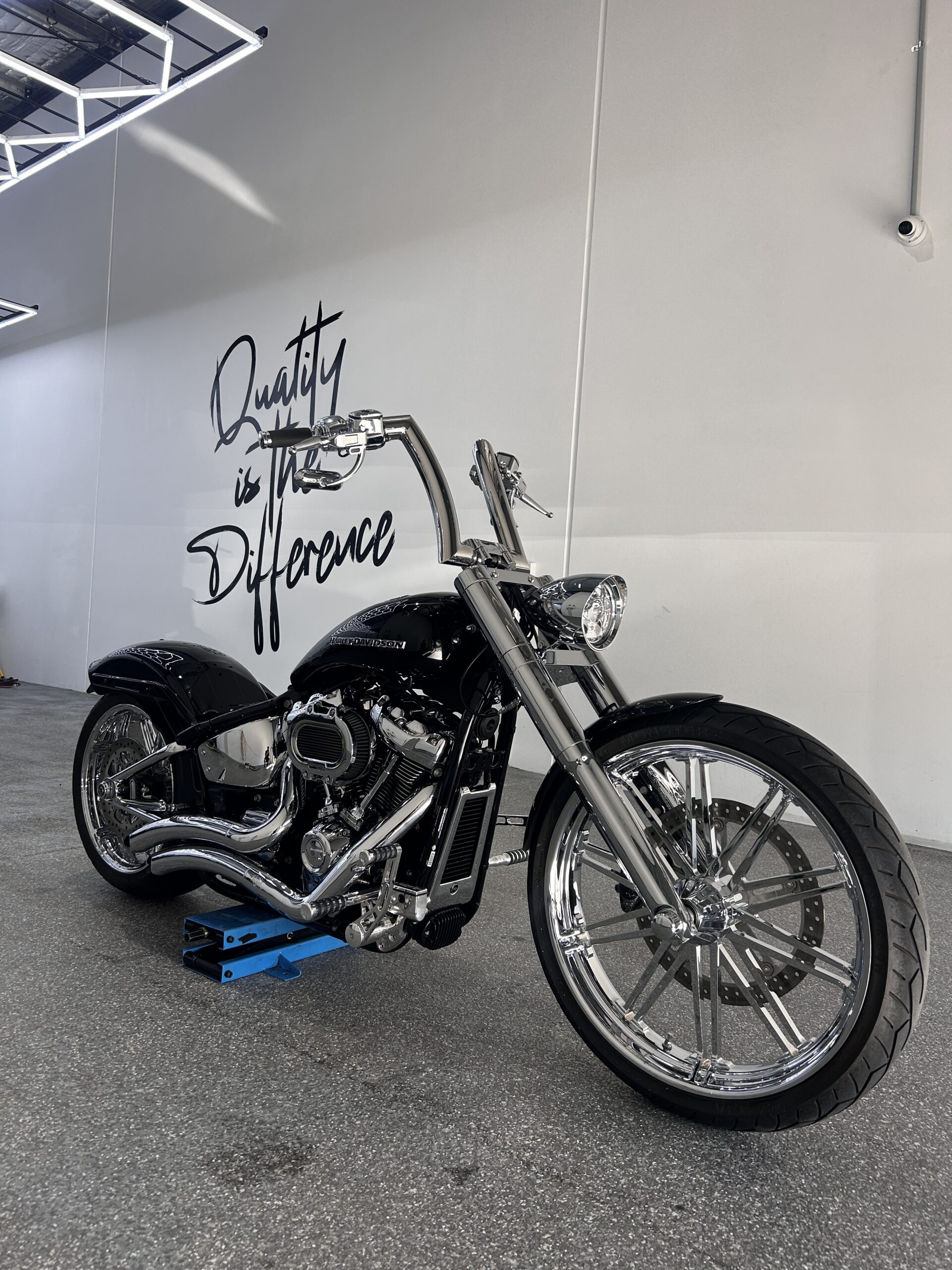

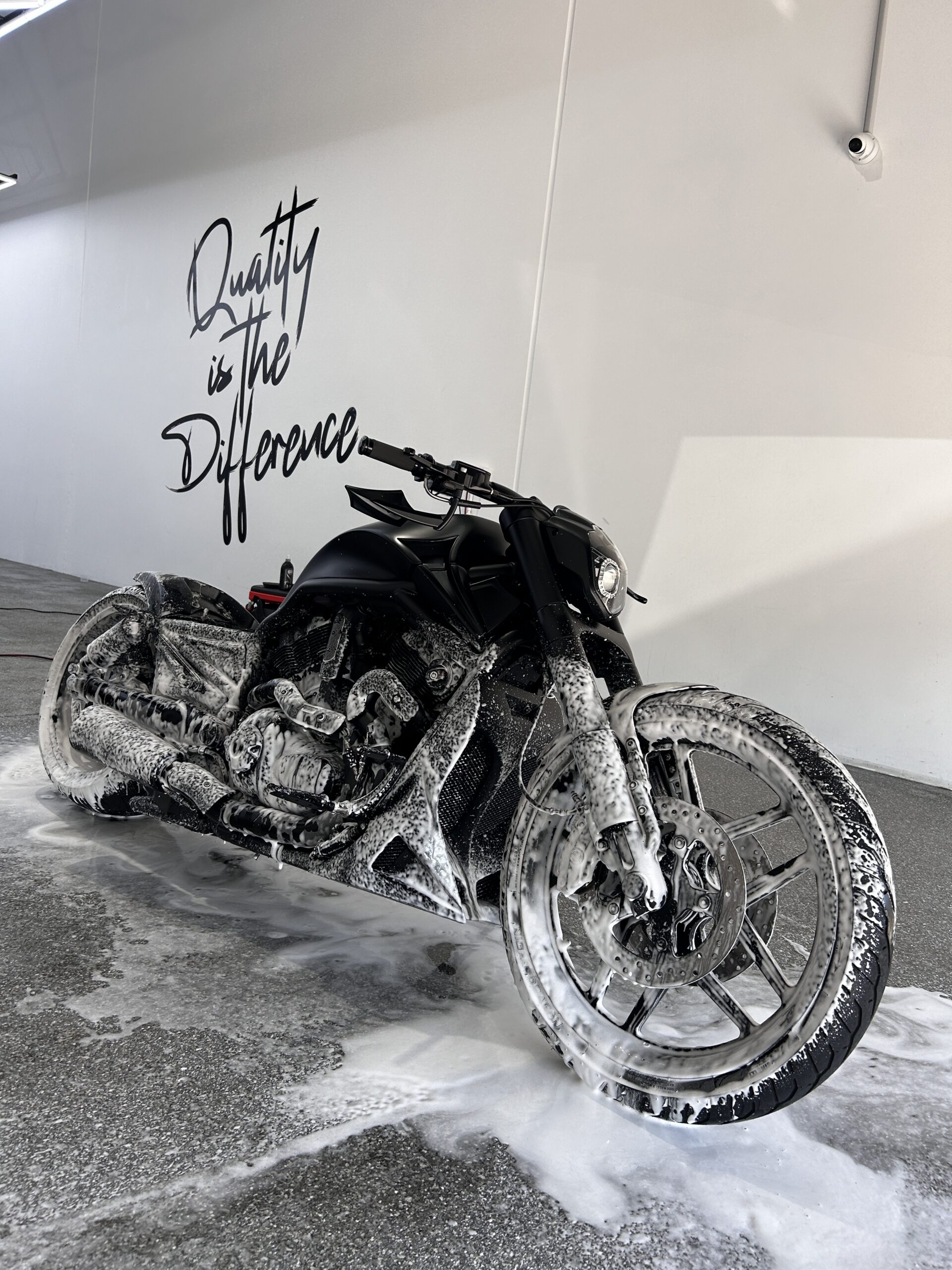
Most of the damage done to a bike happens while it is being cleaned, not while it is being ridden. Chrome gets hazed by the wrong cloth, painted tanks pick up swirl marks from a gritty mitt, alloy gets stained by a wheel cleaner that was never meant to touch it, and water left to dry in the sun leaves spots that then get polished off, which takes a little material with them every time.
None of this is complicated to avoid. It is mostly about the order you do things in, what you use, and not letting the bike dry itself.
Get the loose grit off before anything touches the bike. Every scratch in paint and every haze mark in chrome comes from dragging a particle across the surface, so the more you remove with water alone the less damage the wash does. Take your time on the areas that collect road film: behind the front guard, the lower frame rails, around the swingarm and anywhere behind the engine.
If you have been anywhere near the coast, this matters more. Salt does its damage once it dries and concentrates, and it finds every seam and fastener on a bike. A rinse the same day beats a proper wash three days later.
The two bucket method exists because a single bucket becomes grit soup within minutes and you then rub that grit back into the paint. One bucket for soap, one for rinsing the mitt, and the mitt goes into the rinse bucket before it goes back into the soap.
Keep a separate mitt or brush for wheels, lower frame and anything near the exhaust. Those pick up brake dust and road grime that you never want anywhere near a tank. It is the single easiest habit to adopt and it prevents most swirl marks.
Chrome is plating over a base metal, and once corrosion gets under a break in that plating it lifts and pits from underneath. That is why aggressive cleaners and abrasive pads are a bad idea on chrome even when they appear to work, since anything that scratches the plating gives corrosion a way in.
Use pH-neutral soap and a soft cloth, dry it rather than letting it air dry, and treat water spotting as something to prevent rather than remove. If your chrome is coated, most of the spotting stops happening in the first place, which is the main practical benefit owners notice.
| Do | Do not |
|---|---|
| Rinse thoroughly before touching the bike | Wash a dry, gritty bike straight with a mitt |
| Use pH-neutral soap | Use household detergent or degreaser on paint and chrome |
| Separate mitt for wheels and lower frame | Use the same mitt everywhere |
| Dry with clean microfibre or a blower | Let it air dry in the sun |
| Let the bike cool before washing | Wash a hot bike or spray cold water on hot headers |
| Clean the chain after, not before | Wash the bike after you have flung chain lube everywhere |
Water left on a bike evaporates and leaves the minerals behind, and on chrome that shows up immediately. Use clean microfibre towels or a blower, and get into the places water hides, because water that runs out of a bolt hole an hour later leaves a streak down whatever is beneath it.
A blower is genuinely worth owning for a bike. There are far more places for water to sit than on a car, and blowing it out of the recesses saves both spotting and the corrosion that comes from water sitting against fasteners for days.
Let the bike cool before you wash it. Cold water on hot headers is asking for discolouration and, in the worst case, warping, and soap drying instantly on a hot tank is how you get streaking that then needs polishing off. If you have just ridden in, give it half an hour.
The routine stays the same, it just gets faster and more forgiving. Dirt does not key into the surface as hard, so less contact is needed, and less contact is the entire mechanism by which washing damages a finish. Water beads and runs rather than sitting, which reduces spotting on chrome in particular.
What does not change is that you should still avoid harsh chemicals, still use a soft mitt and still dry it properly. A coating is a sacrificial layer, and scrubbing it with the wrong products just wears it out sooner. The same principle applies on cars, as covered in how ceramic coating works, and the surface-by-surface detail for bikes is in ceramic coating for motorcycles.
If your chrome has already started spotting or hazing and you want it sorted properly before protecting it, bring the bike in and we will have a look.
No. Brush washes are the fastest way to haze chrome and swirl a tank, and high pressure aimed at bearings, switchgear and seals causes problems of its own. Hand washing is the only sensible option on a motorcycle.
A pH-neutral automotive or motorcycle soap. Household detergent strips protection and dries surfaces out, and degreasers belong on chains and drivetrains rather than on paint or chrome.
Dry it rather than removing spots later. Every time you polish a spot off you take a little material with it. Drying with microfibre or a blower straight after washing prevents the problem, and a coating reduces how much the water clings in the first place.
Use it carefully and at distance, if at all. Forcing water past seals, into bearings, switchgear and electrical connectors causes expensive problems that show up weeks later. A normal hose does the job with far less risk.
The same day if you can. Salt does its damage once it dries and concentrates, and a same-day rinse with fresh water is worth more than a thorough wash later in the week.
It means each wash is faster and gentler, not that dirt stops landing. Regular light washing on a coated bike is better for the finish than leaving it dirty and then attacking it, which is when damage happens.
At Prestige Protection we offer superior product and premium service for all car protection services. Save up to 50% off dealership prices when you choose us.