

Two products dominate the conversation around paint protection. Ceramic coating is one. Paint protection film, commonly called PPF, is the other. Both are genuinely useful. Both are worth considering. But they do different things, and treating them as interchangeable leads to the wrong choice for a lot of drivers.
Understanding what each product actually does makes the decision straightforward. The right answer depends on what you want to protect against and what you want the finished result to look like.
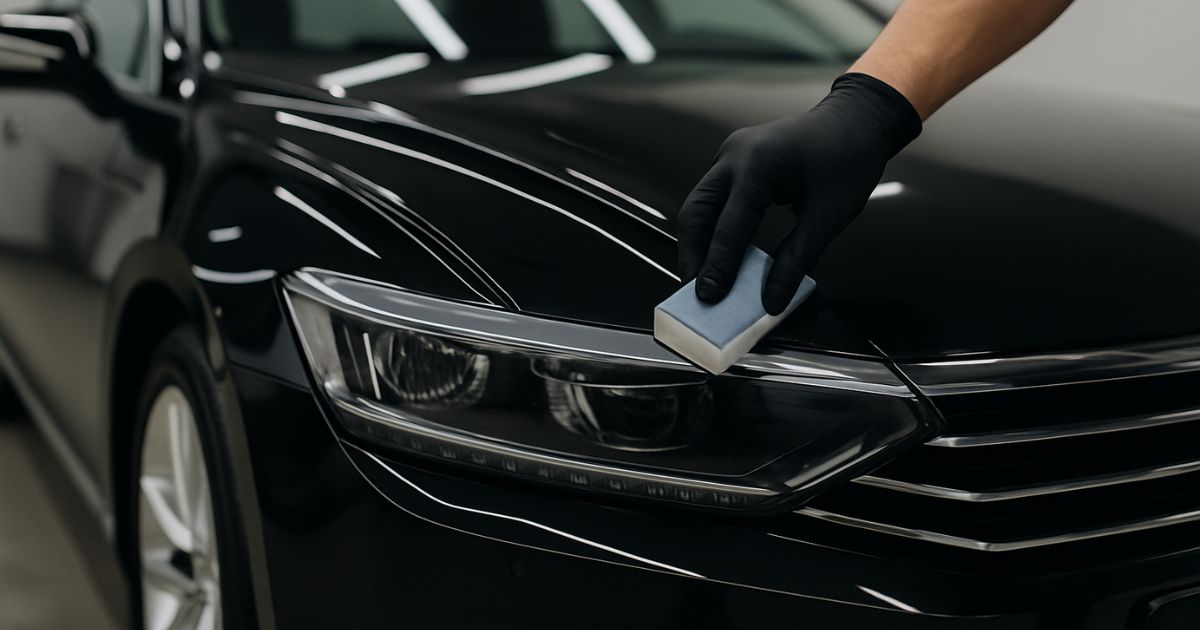
Ceramic coating is a liquid polymer that bonds chemically to the paint surface. It does not sit on top like wax. It integrates with the clear coat and becomes part of the surface itself.
The result is a hard, hydrophobic layer that changes how the car interacts with everything around it. Water beads and rolls off. Dirt and grime do not bond to the surface the way they do on unprotected paint. Washing becomes faster and easier, and the risk of introducing swirl marks through frequent cleaning drops significantly.
The visual improvement is immediate and noticeable. Ceramic coating adds depth and clarity to the paint, creating a high-gloss finish that holds its quality over time. It also blocks UV radiation, which slows the fading and oxidation that Queensland sun accelerates on unprotected vehicles.
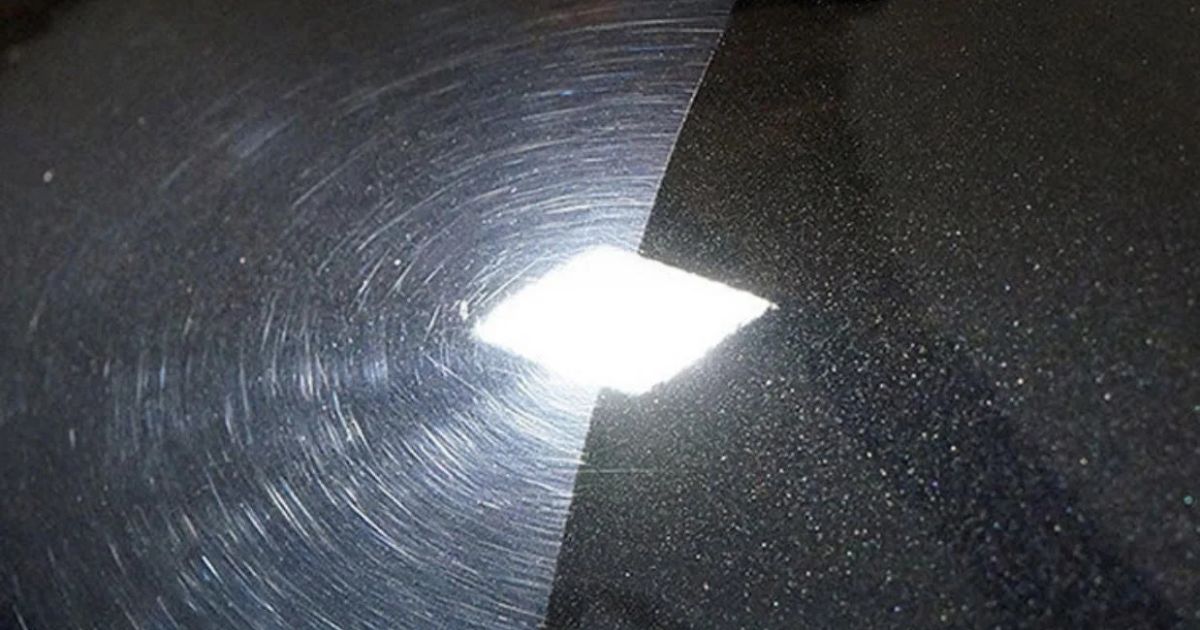
What ceramic coating does not do is stop physical impact damage. Rock chips, deep scratches, and abrasions from road debris go straight through the coating to the paint beneath. The coating adds hardness to the surface, which can reduce minor swirl marks, but it is not a barrier against physical force.
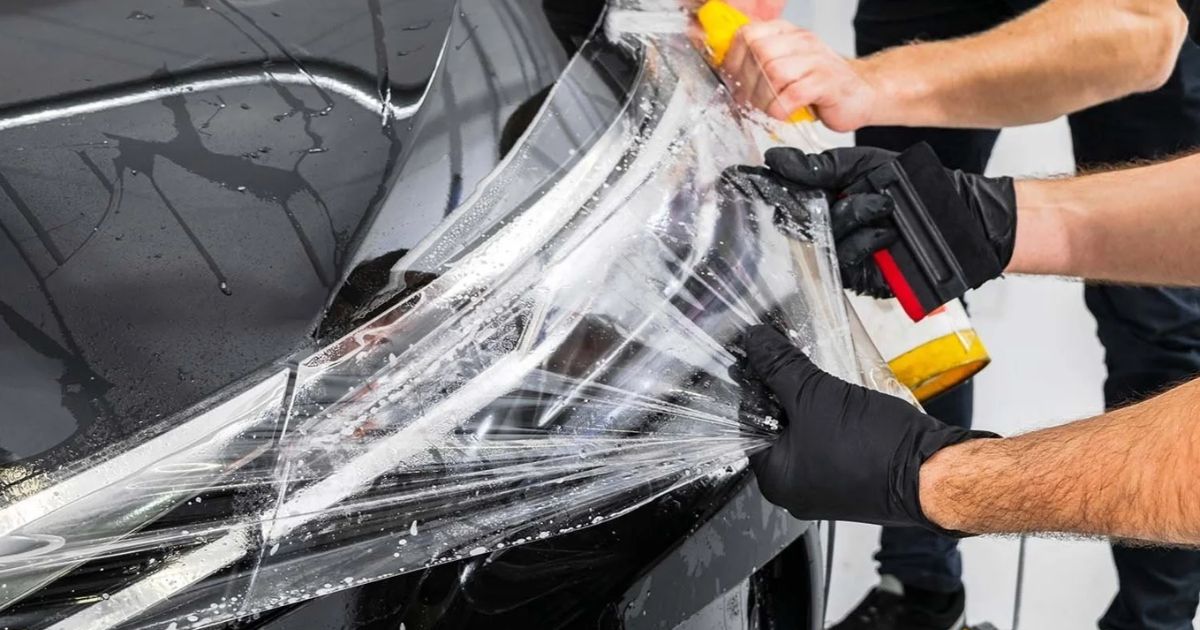
Paint protection film is a thick, flexible thermoplastic urethane film. It physically covers the paint surface and absorbs impact. Rock chips, stone strikes, and minor abrasions hit the film rather than the paint underneath.
This is a fundamentally different type of protection. PPF acts as a sacrificial layer. It takes the damage so the paint does not have to. High-quality PPF films also carry self-healing properties, where light surface scratches disappear with heat exposure from the sun or a heat gun. The film returns to its original state without any intervention.
PPF works best on the areas of a vehicle that take the most punishment. The front bumper, bonnet, side mirrors, and leading edges of the front guards are the zones that collect the most stone chips and road debris. Applying PPF to these areas gives the paint underneath meaningful, lasting protection.
The trade-off is cost and coverage. Full vehicle PPF is considerably more expensive than ceramic coating. Most drivers opt for partial coverage, protecting the highest-risk zones rather than wrapping the entire vehicle.
PPF does not deliver the same visual enhancement as ceramic coating. It protects the paint that exists underneath it, but it does not add the depth and gloss that ceramic coating produces. Some PPF products have a slight texture or finish variation that differs from bare paint, which matters to drivers who prioritise aesthetics as much as protection.
Ceramic coating excels at environmental protection. It handles UV, chemical contamination, water spotting, and general grime. It makes the car easier to maintain and keeps the paint looking sharp.
PPF excels at physical protection. It handles stone chips, impact damage, and scratches. It protects the paint from things that hit the car.
A vehicle with only ceramic coating looks great and stays cleaner, but picks up rock chips on the bonnet and chips on the front bumper over time. A vehicle with only PPF on the high-risk zones stays chip-free in those areas, but still accumulates UV damage and water spotting on the unprotected panels.
Many drivers, particularly those with newer vehicles or higher-value cars, choose to combine the two products. PPF goes onto the high-impact zones. Ceramic coating goes over the entire vehicle, including over the PPF itself.
This approach covers both protection categories. The front end handles physical impact through the PPF layer. Every panel on the car benefits from the hydrophobic, UV-resistant, easy-clean properties of the ceramic coating. The PPF also benefits from having ceramic over it, as the coating makes the film easier to clean and more resistant to contamination.
For prestige vehicles and daily drivers that cover significant highway kilometres, this combination represents the most complete protection available. It is also the most expensive option, so the decision comes down to the vehicle’s value and how the owner uses it.
For a vehicle that spends most of its time in urban traffic, rarely sees highway speeds, and is garaged regularly, ceramic coating alone delivers strong value. It protects against the environmental factors that cause the most visible deterioration over time and keeps the car looking well-maintained with minimal effort.
For a vehicle that regularly covers country roads, long highway drives, or high-speed freeway commuting, the front end takes a regular beating from road debris. PPF on the bonnet, bumper, and mirrors is a worthwhile addition. Paired with ceramic coating across the rest of the vehicle, it handles everything.
For a brand-new prestige or performance vehicle where preserving the condition of the paint over the long term directly affects resale value, the combined approach from day one is the most logical investment.
Queensland conditions are demanding. The UV exposure is intense, the summer heat is extreme, and driving on roads shared with heavy vehicles means stone chip exposure is a real daily factor for many drivers.
Ceramic coating performs well in this environment. The UV protection it provides is relevant every day. The hydrophobic properties make washing easier year-round. A professional-grade product applied correctly lasts several years under normal conditions.
PPF holds up well in Australian conditions too, but the quality of the film matters. Higher-grade films maintain their clarity and self-healing performance over time. Lower-grade alternatives can yellow or cloud with sustained UV exposure, which defeats the purpose of a clear protective film on a vehicle you want to look its best.
Choosing quality products from a specialist rather than the cheapest option available is where the difference in long-term outcome is made.
Ceramic coating and PPF serve different purposes. Ceramic coating bonds to the paint and protects against UV, chemical contamination, and environmental damage. It adds gloss and makes the car easier to clean. PPF physically protects against rock chips, stone strikes, and impact damage on high-risk areas. Neither product replaces the other. Many drivers choose both, applying PPF to the front end and ceramic coating across the full vehicle, for comprehensive coverage. The right choice depends on how the vehicle is used, where it is driven, and what the owner wants to protect against.
At Prestige Protection we offer superior product and premium service for all car protection services. Save up to 50% off dealership prices when you choose us.
© 2026 Prestige Protection. Web Design