

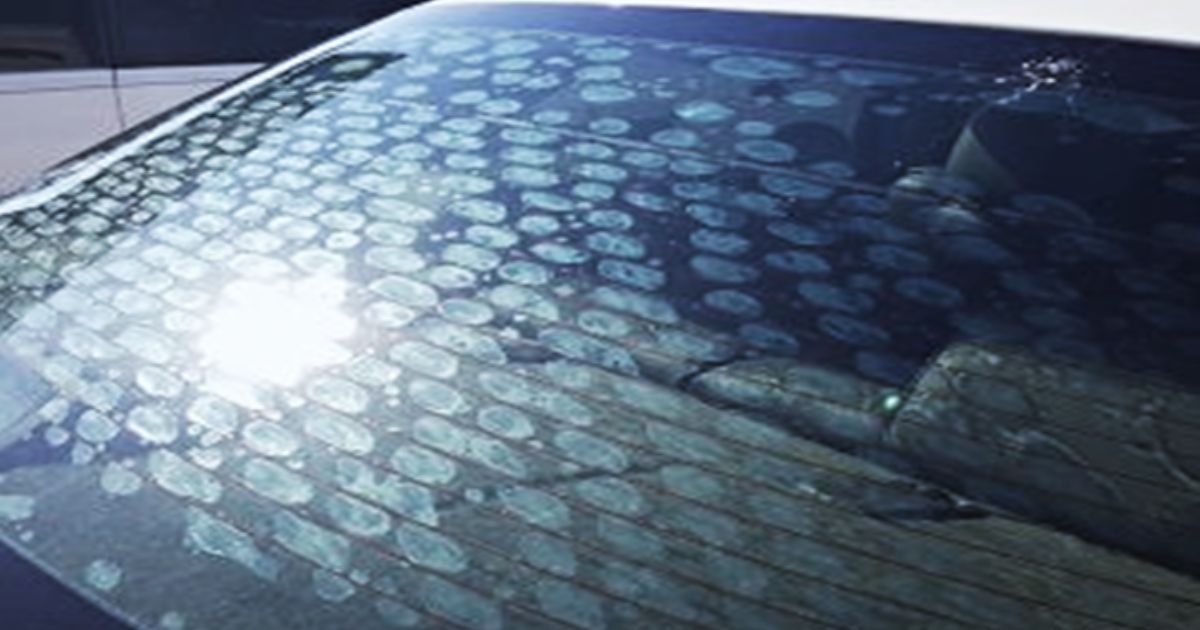
There is a point most drivers reach where the tint on their car stops looking like an upgrade and starts looking like a problem. The film lifts at the edges, small bubbles appear across the surface, and what was once a clean, dark finish starts taking on a distinctly purple hue. It is one of the more visible signs that something has gone wrong, and it tends to get worse quickly once it starts.
Understanding why this happens is useful, not just for knowing when to act, but for making a better decision when the time comes to have it replaced.
Window tint is not a single material. It is a layered product that typically combines a polyester film base, a dye or pigment layer that creates the colour and light absorption, and an adhesive layer that bonds the film to the glass. In lower-grade products, these layers are more vulnerable to heat, UV exposure, and moisture, and when they start to break down, the results become visible fairly quickly.
The purple discolouration is a specific failure pattern tied to how dyed window films are constructed. Standard dyed tints use a combination of dyes to achieve their black or charcoal appearance. Those dyes are not equal in how they respond to UV radiation. The blue dye degrades faster than the others, and once it breaks down, the remaining red and yellow dyes are what the eye picks up. The result is a film that reads as purple, often with an uneven quality across different parts of the glass depending on where sun exposure has been most intense.
Bubbling is a separate but related issue. When the adhesive layer loses its bond with the glass, air or moisture gets between the film and the surface. This creates pockets that appear as raised areas across the tint. In early stages, bubbles can be small and isolated. As the adhesive continues to fail, they spread and merge, eventually causing sections of the film to lift entirely.
Both of these problems are the result of material degradation, and they are almost always connected to the quality of the product that was installed in the first place.
Not all window films are made to the same standard, and the difference in how long they last under real conditions is significant.
Entry-level dyed films are the most commonly used product in budget tinting operations. They are inexpensive, relatively easy to apply, and look acceptable immediately after installation. The problems begin when they are exposed to the conditions that Queensland drivers deal with every day: intense sunlight, high ambient temperatures, and the heat that builds up inside a parked vehicle over summer.
The dyes in these films are not stable under prolonged UV exposure, which is why colour shift happens. The adhesives used in cheaper products also have a lower tolerance for heat, which accelerates the debonding process that leads to bubbling.
Higher-quality films, particularly those that use carbon or ceramic technology rather than dye, are engineered to resist exactly these failure modes. Carbon and ceramic films do not rely on dyes to achieve their performance characteristics, so colour shift is not a factor. The adhesive systems used in premium films are also formulated for long-term stability under heat and UV exposure. The cost difference reflects the difference in material quality and expected lifespan.
Even a quality film will fail prematurely if it is not installed correctly, and poor installation is one of the most common causes of early bubbling.
Window tinting requires the glass to be thoroughly cleaned and prepared before the film is applied. Any dust, debris, or contamination on the surface creates weak points in the adhesive bond. If moisture is not properly excluded during application, it can be trapped between the film and the glass, leading to bubbles that appear within weeks of installation rather than years.
The application environment matters as well. Tint applied in dusty conditions, in direct sunlight, or without adequate temperature control is more likely to have issues with contamination and adhesion. Professional installers work in controlled conditions precisely because these factors affect the quality of the finished result.
The skill of the technician also plays a role. Applying film to curved glass, particularly rear windscreens, requires careful technique to avoid creasing, lifting at the edges, and uneven adhesion. These areas are where failure tends to appear first when the installation has not been done carefully.
Deteriorating window tint is not just an aesthetic issue. Once bubbling becomes significant or the film starts to lift, it begins to affect visibility. At night, the distortion created by uneven film across the glass makes it harder to judge distance and see clearly through the window. During the day, the same distortion affects peripheral vision and can create distracting reflections inside the cabin.
In Queensland, a vehicle with tint that has deteriorated to the point of affecting visibility can be considered non-roadworthy. A defect notice requires the film to be removed, and the vehicle cannot be driven until the issue is rectified and cleared. Aside from the inconvenience, there is also the cost of removal, which is not always straightforward depending on how long the film has been on the glass and what condition the adhesive is in.
Delaminating film on the rear window also poses a specific risk to the demister elements embedded in the glass. Improper removal can damage these elements, which are expensive to repair or replace. Professional removal using the correct tools and techniques avoids this problem.
The clearest sign that tint needs to be removed and replaced is visible bubbling or purple discolouration across any of the windows. At this point, the film is no longer performing its intended function and is likely creating visibility issues. Waiting does not improve the situation, as adhesive failure tends to accelerate once it starts.
Earlier warning signs include small isolated bubbles near the edges of the glass, slight colour variation across the film, or areas where the film appears to be slightly raised. Catching the problem at this stage makes removal easier and reduces the risk of adhesive residue or damage to the glass during the process.
Tint that was installed more than five to seven years ago using a standard dyed film in Queensland conditions is approaching the end of its reliable lifespan regardless of whether visible signs of failure have appeared yet. Having it assessed before it reaches the point of obvious deterioration is a practical way to stay ahead of the issue.
Removing old window tint requires loosening the adhesive bond between the film and the glass, then carefully peeling the film away without leaving residue or damaging the glass surface. On rear windows with demister elements, this step requires particular care to avoid catching the heating elements with the film.
Once the old film is removed, the glass is cleaned thoroughly to remove any adhesive residue before the new film is applied. This preparation stage is where a lot of budget operations cut corners, and it is also where the quality of the finished result is determined. Starting with a clean, residue-free surface is essential for the new film to bond correctly and last as long as it should.
Choosing a higher-quality film for the replacement is the obvious way to avoid going through the same process again in a few years. In Queensland’s climate, a ceramic or carbon film represents a meaningful investment in longevity and performance compared to a dyed alternative at a lower price point.
Window tint turns purple because the blue dye in standard dyed films degrades faster under UV exposure than the red and yellow dyes, leaving a visible colour shift behind. Bubbling occurs when the adhesive layer loses its bond with the glass, typically due to heat, UV degradation, or poor installation. Both problems are strongly associated with lower-grade film products and are less common in carbon or ceramic alternatives. Deteriorating tint affects visibility, can render a vehicle non-roadworthy in Queensland, and should be removed and replaced by a professional to avoid damage to the glass during the process.
At Prestige Protection we offer superior product and premium service for all car protection services. Save up to 50% off dealership prices when you choose us.
© 2026 Prestige Protection. Web Design